
International School Fees in Phnom Penh: A School-by-School Cost Guide
Direct Answer
Year-one cost for one child at a mid-tier Phnom Penh international school is roughly USD 12,000–16,000 all-in (tuition, capital fee, enrolment, transport, uniform). Top-tier schools (ISPP, Northbridge, Shrewsbury, AISPP) run higher again, with year-one totals commonly above $28,000 once one-time fees and extras are added. Entry-tier international schools start near $5,000–$7,000 in published tuition. The school-by-school comparison below has the actual numbers, where they are publicly verifiable for the 2025–26 academic year.
Reality Snapshot: Year-One Costs (One Child, 2025–26)
| School | Tier | Tuition (primary year, USD) | Annual capital fee | One-time entrance + application | Source for fee detail |
|---|---|---|---|---|---|
| ISPP | Top (IB) | $21,840 (KG–Grade 5) | $2,782 | $3,500 + $250 (KG–Grade 12) | ISPP official fee schedule (2026–27) |
| Northbridge (NISC) | Top (IB) | $21,460 (KG) | $2,990 | $850 + $290 | NISC published 2025–26 fee schedule |
| Shrewsbury Phnom Penh | Top (UK) | See fee schedule | Included in tuition | $3,000 Guaranteed Place + $300 | shrewsbury.edu.kh ADM05 (2025–26) |
| AISPP | Top (Australian/IB) | See fee schedule | See fee schedule | See fee schedule + $250 | aispp.edu.kh fee schedule (2025–26) |
| iCAN British International | Mid (UK) | $8,190 (EYFS–Year 4) | $1,000 (EYFS) / $1,200 (MP1–3) | One-time, non-refundable | ican.edu.kh fees page |
| CIA FIRST | Mid (US/IB) | See fee schedule | See fee schedule | See fee schedule | ciaschool.edu.kh school fees |
| Footprints International | Entry | $5,106 (Grades 1–5) | $300 | $600 ($300 sibling) + $30 | footprintsschool.edu.kh fees |
The "Tuition (primary year)" column shows the published annual rate for one primary-aged child before sibling discounts. Capital fees, transport, lunch, uniform, and language support are billed separately at most schools and are covered in the structural breakdown further down. "See fee schedule" entries point to schools whose 2025–26 numbers are published in Cambodian Riels rather than USD on the public site. They also flag schools whose per-grade USD figures could not be independently confirmed against three sources within the past 12 months.
This guide covers full-fee international schools in Phnom Penh that teach a recognised international curriculum (British, American, Australian, IB). Bilingual and Khmer-curriculum schools are not in scope. Numbers come from each school's published 2025–26 fee schedule and the international-schools-database listings for the same year. Total-spend figures are drawn from expat parent communities. Individual quotes vary by year group, sibling discount, and entry term. Re-confirm with admissions before signing any enrolment agreement.
Table of Contents
- The School Market in Phnom Penh: A Practical Tier Map
- The School-by-School Comparison
- How Phnom Penh School Fees Are Actually Structured
- The Cost Most Expat Parents Discover Too Late: Language Support
- A Worked Family Budget: Two Kids, One in Early Years, One in Primary
- How the Budget Changes After Year One
- Practical Notes Before You Enrol
- Frequently Asked Questions
The School Market in Phnom Penh: A Practical Tier Map
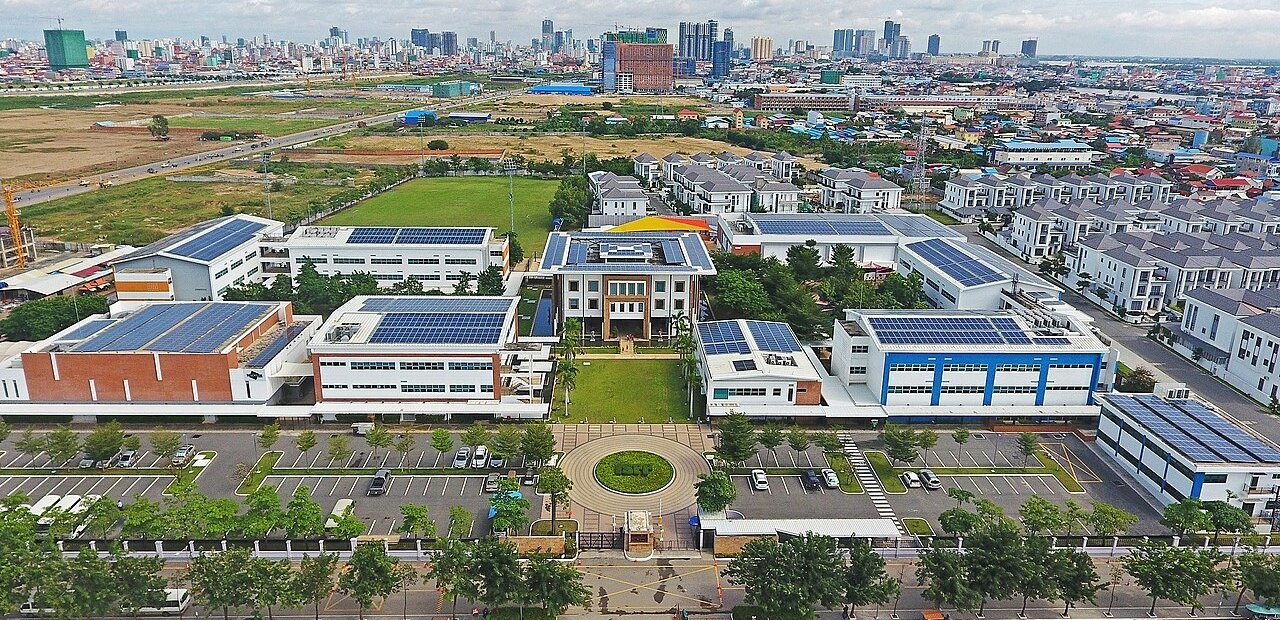
Phnom Penh has more international schools than most arriving families expect. Around 30 schools run an English-medium programme that meets some recognised international standard, and new ones open every year. The price gradient between them is steep. The tier you target usually decides itself once you know what your employer covers and what curriculum continuity matters to you.
The four tiers below are editorial. Schools group themselves loosely by curriculum, accreditation, and price, not by any official ranking.
Entry international (roughly $3,000–$7,000 a year in tuition). Schools such as Footprints International, East-West, and Brighton International. Class sizes are larger, facilities are modest, and extra-curricular programming is limited. These are used by some NGO families, single-income households, and parents who treat school as one part of a broader bilingual upbringing.
Mid-range international ($8,000–$16,000 a year in tuition). Schools such as iCAN British International, CIA FIRST, Hope International, Logos, and Invictus. Reasonable facilities, credible accreditation, and a mixed expat-local community. A common landing point for families with a partial school allowance, or for those who would rather spend the difference on housing or savings.
Top tier IB schools ($19,000–$30,000+ a year in tuition). International School of Phnom Penh (ISPP), Northbridge International School Cambodia (NISC), and Australian International School Phnom Penh (AISPP). All three carry full IB authorisation across the Primary Years, Middle Years, and Diploma Programmes. They employ Western-trained teachers and offer the strongest curriculum continuity for families who expect to relocate again.
Top tier British curriculum ($12,000–$25,000 a year in tuition). Shrewsbury International School Phnom Penh is the dominant name here. The curriculum is the National Curriculum for England leading to IGCSE and A Level. A different track from the IB schools but a similarly premium positioning. The natural choice for families planning a return to a British or European educational system. Shrewsbury is also expanding rapidly, with a new 7.2-hectare Sen Sok campus opening in September 2026.
The published 2025–26 numbers in the table above are headline tuition for a single primary-aged child. The full year-one cost runs higher once capital fees, one-time charges, transport, and any language support are added, regardless of tier.
The School-by-School Comparison
A short block on each school in the comparison table. The blocks are descriptive, not evaluative. The "which is best" question is a different article.
International School of Phnom Penh (ISPP)
Top tier IB. Founded 1989, full IB continuum, Western-trained faculty. The 2025 US Department of State fact sheet lists ISPP's annual tuition by programme:
- PreK: $9,011
- Elementary: $19,749
- Middle School: $23,811
- High School: $25,714
One-time fees are $250 application per child (non-refundable) and $3,500 entrance for Kindergarten through Grade 12. Early Years adds a $750 yearly deposit, credited to the entrance fee on Kindergarten entry. Sibling discounts begin at the third child (5% off tuition; 10% from the fourth). ISPP's School Fees page links the current schedule and lunch plan. Admissions confirms grade-specific tuition and any optional service charges directly.
Northbridge International School Cambodia (NISC)
Top tier IB. Published 2025–26 tuition is $21,460 for Kindergarten and $21,752 for Grade 3, with secondary grades higher. The annual capital fee is $2,990 per student, billed every year of enrolment. One-time fees: $290 application, $850 entrance, $1,000 refundable deposit, and a $1,500 transition fee for children moving from Early Learning 4 to Kindergarten. Bus is $2,080 per child for the full year. The published EAL schedule is $1,250 per semester for Tier 2 and $2,195 for Tier 3.
Shrewsbury International School Phnom Penh
Top tier British curriculum. The 2025–26 ADM05 fee schedule on shrewsbury.edu.kh is the authoritative document and is required for any specific tuition figure. The application fee is $300 per child. The Guaranteed Place Fee is $3,000 per child to secure a seat, non-refundable but offset against first-term tuition. Sibling discounts: 5% for the second child and 10% for the third onward. A 5% discount applies to families paying the full annual tuition in one lump sum at the start of the year. Tuition does not include co-curricular trips, school bus, meals, uniform, or personal IT devices.
Australian International School Phnom Penh (AISPP)
Top tier IB (Primary, MYP, Diploma). The 2025–26 Fee Schedule PDF on aispp.edu.kh is the reference for grade-specific tuition. The application fee is $250 per child, and AISPP offers family discounts, with the published 2025–26 schedule confirming at least a 5% tuition reduction for the youngest eligible child. Confirm larger family discounts directly with admissions.
iCAN British International School
Mid tier British curriculum. Published tuition for 2025–26 ranges from $8,190 a year (Early Years through Year 4) to $10,920 a year (Years 7 to 9). The annual capital fee is $1,000 for EYFS and $1,200 for MP1, MP2, and MP3. The first-time enrolment fee is one-time and 100% non-refundable. Key-stage transitions attract a $500 top-up. Two payment plans are offered: a single payment due in early June, or four instalments across the academic year.
CIA FIRST International School
Mid tier (US-style and IB). The school publishes its 2025–26 fee schedule in Cambodian Riels at ciaschool.edu.kh. The sibling discount is among the most generous in the city: 5% off tuition for the second child, 20% off for each further child. Confirm grade-specific tuition and one-time fees with admissions in writing before committing.
Footprints International School
Entry tier international. The 2025–26 published rates:
- Nursery to Kindy (full-time): $4,563 a year
- Grades 1–5: $5,106 a year
- Grades 6–8: $5,691 a year
- Grades 9–12: $6,250 a year
One-time enrolment is $600 (or $300 for siblings) and the application fee is $30. The annual capital and administration fee is $300 per student. Print and digital learning materials are billed annually and rise with grade level (Kindy $50; Grades 11–12 $450). A 10% discount applies if tuition is paid in one annual payment.
How Phnom Penh School Fees Are Actually Structured
The line items below are the same across most Phnom Penh international schools. The dollar values describe the top tier IB schools unless noted. That is where the bills are largest and where most readers want a closer look.
Tuition
The core annual rate, set per grade. Every school publishes this. Premium IB tuition for primary-aged children sits in the high teens to low twenties of thousands of dollars per year. Secondary grades cost more, and IB Diploma years (Grade 11 and 12) are usually the most expensive line in the schedule. Tuition can be paid annually, by semester, or by quarter, with a finance charge added for instalments at most schools.
The Annual Capital Fee
A separate annual charge used for campus maintenance and development. It recurs every year. Northbridge publishes it at $2,990 per student. ISPP, iCAN, and Footprints publish their own annual capital figures at lower amounts. This is the line most families forget when comparing tuition headlines.
One-Time Enrolment Fees (Year One Only)
These land in the first year only. The application fee is non-refundable and per child: $30 at Footprints, $250 at ISPP and AISPP, $290 at NISC, $300 at Shrewsbury. The entrance, registration, or guaranteed-place fee is a one-time charge on acceptance. The figure varies sharply: $600 at Footprints, $850 at NISC, $3,000 at Shrewsbury, $3,500 at ISPP. NISC also charges a $1,500 transition fee when a child moves from Early Learning 4 to Kindergarten. A $1,000 refundable deposit is collected on enrolment and returned at exit when proper notice is given.
The refundable deposit is real cash on day one even if it returns later. Budget it as a Year-1 outlay.
Bus Transport
Optional but commonly used, especially if you live outside the school's immediate area. Phnom Penh traffic compresses options: a route that looks short on a map can run 45 minutes in a tuk-tuk during rush hour. NISC charges $2,080 per child for the full year. ISPP, AISPP, and others run their own services with separate fees and route limits, and seats fill up. Two children on the bus is roughly $4,000 to $4,500 a year on top of tuition.
Housing choice matters here. Before choosing a school area, read the guide to renting an apartment in Phnom Penh, especially the sections on neighbourhoods, lease terms, and first-month costs.
School Lunch Plan
A canteen subscription is common but optional. ISPP runs different menus for Early Years, Grades 1–5, and Grades 6–12, billed separately. Most parents report spending $400 to $700 per child per year on the school plan, depending on days taken. Many families pack lunches and skip the plan; this is straightforward at every school in the city.
Uniform
The schools diverge here. Northbridge bundles two PE kit sets, a water bottle, a bag, a hat (Primary), and a house shirt for new starters into the headline tuition. That is unusually inclusive. Most other schools, including ISPP, charge for uniform separately. First-year uniform spend for a young child is typically $150 to $350. The variation depends on how many sets are required and whether the school enforces branded items strictly.
Language Support
For a child arriving with limited English, English as an Additional Language (EAL) support is the line that surprises families most. Pricing varies more between schools than tuition does.
At Northbridge, EAL is assessed by the school and tier-priced. The published 2025–26 rates are $1,250 per semester for Tier 2 and $2,195 per semester for Tier 3. Up to $4,390 per child per year, on top of everything else. The school decides which tier applies, not the parent.
ISPP's approach has historically been different. The 2023–24 US State Department fact sheet for ISPP recorded English language and learning support at no extra cost to enrolled students. Mother tongue programme participation was charged separately. The current 2025 ISPP fact sheet should be checked directly against current admissions information. Policies are reviewed annually. Families with non-native English-speaking children should ask explicitly: is EAL charged, and at what rate?
Shrewsbury, AISPP, iCAN, CIA FIRST, and Footprints all run their own EAL or English-support programmes. The published policies and pricing differ. Confirm the school's exact EAL placement criteria and any per-term cost in writing before enrolment, especially for a child entering primary years with little English.
There is also the question of mother-tongue maintenance. No German-curriculum international school has been identified in Phnom Penh. German-language classes run at the Goethe Institut and Meta House as supplementary programmes, not full school pathways. ISPP and several other premium schools offer Mother Tongue programme support at extra cost. This is the closest in-school option for keeping a non-English first language alive while the child works through the IB or British curriculum.
A Worked Family Budget: Two Kids, One in Early Years, One in Primary
The example below uses Northbridge as the named school because the published 2025–26 fee schedule covers every line item the calculation needs. Two children, both enrolling for the first time. Child one is entering Kindergarten (age 5). Child two is entering Grade 3 (age 8). Neither is a native English speaker.
| Cost item (NISC, 2025–26) | Child 1: KG | Child 2: Grade 3 |
|---|---|---|
| Annual tuition | $21,460 | $21,752 |
| Annual capital fee | $2,990 | $2,990 |
| One-time entrance fee | $850 | $850 |
| Application fee | $290 | $290 |
| KG transition fee (EL4→KG only) | $1,500 | – |
| Bus (annual, optional) | $2,080 | $2,080 |
| Lunch (annual, estimated) | $500 | $500 |
| Uniform (Year 1) | bundled | bundled |
| Year-1 subtotal (excluding refundable deposit) | ~$29,670 | ~$28,462 |
| Refundable deposit (cash on enrolment) | $1,000 | $1,000 |
| Year-1 cash outlay | ~$30,670 | ~$29,462 |
Combined Year-1 cash outlay for both children, before any EAL support: roughly $60,132. About $58,132 of that is non-refundable. From Year 2 onwards, the ongoing annual cost runs roughly $51,000 to $53,000 for both children together, before EAL. The drop reflects one-time fees gone and refundable deposits no longer recurring.
EAL adds materially in Year 1 if either child is placed in Tier 2 or Tier 3. At the published rate, one child in Tier 3 EAL across two semesters is $4,390. Two children in EAL Tier 2 together is $5,000.
Sibling discounts at NISC begin at the third enrolled child (5% off tuition) and rise to 10% from the fourth. With two children at NISC, no automatic sibling discount applies. Other schools have lower thresholds. CIA FIRST starts at the second child (5%, then 20% from the third). AISPP and Shrewsbury also start at the second child (5%, then 10%, with AISPP adding a 15% tier from the fourth). The sibling line is worth pricing in if you are choosing between schools and have two or more children.
School planning usually happens after the visa side is already in motion. If you are still deciding your legal stay route, start with the broader breakdown of Cambodia long-stay visa options for foreigners. Families depending on local income should also compare those costs with what foreigners can realistically earn in Cambodia. Fees sit on top of an ordinary household budget rather than inside it, so price them against the monthly cost of living in Phnom Penh before you set a school shortlist.
How the Budget Changes After Year One
The first year is the most expensive by a wide margin. From Year 2, one-time fees disappear. The annual capital fee continues. Tuition rises 3% to 5% a year at most premium schools, communicated in the re-enrolment paperwork. Bus and lunch are re-priced annually. EAL costs typically fall as children acquire English; many exit support by Year 2 or Year 3.
Practical Notes Before You Enrol
- Apply early. ISPP's admissions pages note that classes are quite full and that waiting lists exist in some grade levels; the school advises families that a future-year place cannot be guaranteed until the March–June enrolment window.
- Check your employer's school allowance carefully. Most corporate packages cap at a fixed figure per child per year, and the cap may not cover the full all-in cost. This is a negotiating point before signing the relocation agreement.
- Ask each school for a language assessment before enrolment. Knowing whether EAL applies in Year 1 changes the budget by thousands.
- Read the fee-schedule footnotes. Schools differ on what tuition includes (textbooks, trips, IT devices, lunch, uniform), and the differences are buried.
- Most schools require 60 days' written withdrawal notice. Without notice, fees may continue to be charged. Tuition refunds are usually available only for full unused quarters. Capital fees are non-refundable once the year has started.
- Late payments attract penalties at the premium schools (typically 5% after two weeks, with weekly additions thereafter). Some schools require full annual payment before a child begins class.
Frequently Asked Questions
Which Phnom Penh international school is the most expensive?
By published 2025–26 numbers, the top-tier IB schools (ISPP, NISC, AISPP) sit highest for a like-for-like primary-aged child. Diploma-year tuition at the top tier reaches around $25,000 to $26,000 a year before extras. Shrewsbury sits within the same premium band on the British curriculum track.
Are sibling discounts real, and how much?
Yes, but the structure varies. NISC starts at the third child (5%, then 10%). ISPP also begins at the third child. AISPP starts at the second child (5%, 10%, 15% from the fourth). CIA FIRST starts at the second (5%, then 20% from the third). Shrewsbury starts at the second (5%, then 10%). Most families with two children get a small discount or none, depending on school.
Do schools accept payment in instalments?
Most do, with a finance charge added. Quarterly or termly is common. Lump-sum annual payment usually attracts a discount of 5% to 10% (Footprints offers 10%; Shrewsbury offers 5%).
What happens to fees if we leave mid-year?
Most premium schools require 60 days' written notice. Tuition for the unused full quarter is usually refundable; partial-quarter refunds are not. Capital fees are non-refundable once the year has started. Refundable deposits return only when notice procedures are followed correctly.
Is EAL always extra?
No. NISC charges by tier (up to $4,390 per child per year). ISPP's 2023–24 fact sheet recorded EAL at no extra cost; current policy should be confirmed. Other schools sit between these two positions. Always ask in writing.
What is the cheapest credible international school in Phnom Penh?
Footprints publishes the lowest 2025–26 tuition among schools running a recognisable international curriculum. The headline rates run from $4,563 a year at Nursery to Kindy full-time to $6,250 a year at Grades 9–12. Capital and administration is $300 a year per child. Other entry-tier schools sit in a similar band. Due-diligence on accreditation and class size matters more than headline price at this level.
Key Sources
- ISPP, School Fees page, 2025–26 schedule. https://www.ispp.edu.kh/join-ispp/school-fees/ (accessed 2026-05-07)
- US Department of State, International School of Phnom Penh 2025 Fact Sheet. https://www.state.gov/international-school-of-phnom-penh-fact-sheet/ (accessed 2026-05-07)
- Shrewsbury International School Phnom Penh, SISPP ADM05 Fee Schedule 2025–26. https://shrewsbury.edu.kh/wp-content/uploads/2025/07/SISPP-ADM05-Fee-Schedule-2025-26.docx-1.pdf (accessed 2026-05-07)
- AISPP, Fee Schedule 2025–2026. https://aispp.edu.kh/wp-content/uploads/2025/04/Fee-Schedule-2025-2026-1.pdf (accessed 2026-05-07)
- iCAN British International School, Fees. https://www.ican.edu.kh/joinus/fees/54/detail (accessed 2026-05-07)
- CIA FIRST International School, School Fees. https://ciaschool.edu.kh/school-fees.html (accessed 2026-05-07)
- Footprints International School, Fees, 2025–26. https://footprintsschool.edu.kh/ (accessed 2026-05-07)
- International Schools Database, Phnom Penh fee listings, 2025–26. https://www.international-schools-database.com/in/phnom-penh (accessed 2026-05-07)
Read Next
- Where to Start Renting an Apartment in Phnom Penh as a Foreigner: The Real Search Process, Lease Terms, and First-Month Mistakes
- What Jobs Can Foreigners Get in Cambodia in 2026?
- Cost of Living in Phnom Penh for Foreigners: Real Monthly Budgets
- Cheapest Countries in Southeast Asia for Long-Term Living: Vietnam, Thailand, the Philippines, Indonesia, Cambodia and Laos Compared (2026)